Nobody wakes up and decides to snore; that would be insane if they did. It just happens, usually to the annoyance of the person lying right next to you, and usually right after they finally got comfortable. Then comes the elbow, the rolling over, and the brief truce until it all starts again.
Here is the good news. Snoring is a mechanical problem before it is a medical one, and the mechanics are surprisingly adjustable. Figuring out how to reduce snoring starts with understanding what is actually vibrating up there, then working through the handful of things you can change without buying a single gadget that costs way too much money.
Read on to learn more about how to stop snoring once and for all below.
What Causes Snoring in the First Place
When you fall asleep, the muscles in your throat, tongue, and soft palate relax. That is supposed to happen, yes, but relaxed tissue takes up space in an airway that is already fairly narrow, and the space it leaves behind gets smaller.
Air still has to get through, though. When it squeezes past that narrowed opening, it moves faster and turns turbulent, and the loose tissue flutters in the current. That flutter is the sound. It is the same reason a partially pinched garden hose hisses while a fully open one does not.
So, anything that narrows the airway or relaxes the tissue further tends to make snoring louder. Back sleeping, alcohol before bed, nasal congestion, a stuffy warm room, and a pillow that tips your head at a bad angle all push in the same direction.
The reverse is also true, which is where you get some leverage to make a change and finally stop snoring every single night.
Why Sleep Position Changes Everything
If you only change one thing, change this one please. Sleep position is the single biggest variable most people can adjust, and it costs nothing. Understanding the best sleeping position for snoring comes down to what gravity is doing to your tongue.
Back Sleeping and Gravity
Lying flat on your back puts your airway in the worst possible orientation. Your tongue and soft palate are soft tissue with nothing holding them forward once you are asleep, so gravity pulls them straight back toward your throat. The airway narrows exactly where the vibration happens, and voila, you start snoring.
This is why so many people snore only on their back, and why a partner's nudge to roll over sometimes works instantly. If your snoring seems to come and go without explanation, there is a decent chance you are tracking your own sleep position without realizing it.
Side Sleeping as the Default Fix
Turn onto your side and gravity stops working against you. The tongue falls sideways instead of backward, the soft palate stays clearer of the airway, and the passage stays more open through the night. It is the position most commonly recommended for snoring, and for a lot of sleepers it is the whole solution. If that's you're problem, you can lie your head down now and give it a shot.
That said, staying there is the harder part. Most people drift back onto their back at some point, especially in the second half of the night. A body pillow to lean into, or the classic trick of putting something behind your back so rolling over is uncomfortable, helps hold the position long enough for it to matter.
The good news is that we have your back every step of the way with a guide on how sleep position shapes your body.
When Side Sleeping Still Isn't Quiet Enough
Sometimes you roll onto your side, do everything right, and the snoring continues anyway. Frustrating, sure, but also very informative. It usually means the airway restriction is coming from somewhere position alone cannot fix, most often the nose rather than the throat.
Nasal congestion, a deviated septum, chronic allergies, or a head cold all restrict airflow before it ever reaches the soft palate. Position changes will not do much when the bottleneck is that far upstream. That is worth knowing, because it points you toward the congestion section below rather than another night of experimenting with pillows.

How Your Pillow Loft/Height Affects Snoring
A pillow cannot treat snoring, and anyone telling you otherwise is selling something, probably snake oil. What a pillow can do, however, is stop making things worse for you, which turns out to be a meaningful difference for some sleepers.
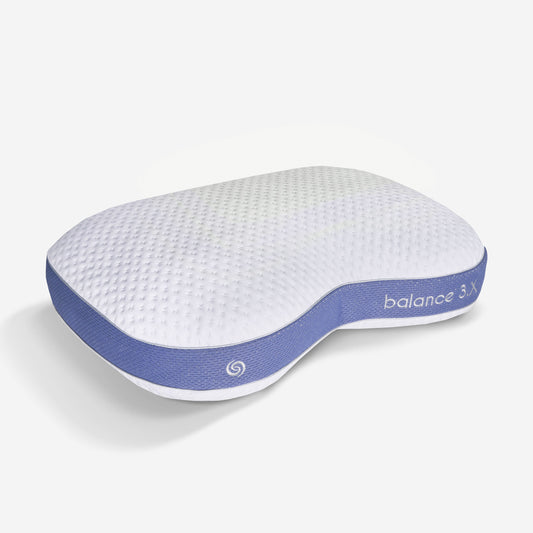
The mechanism is head angle. A pillow that is too flat lets your head drop back and tips your chin upward, stretching and narrowing the airway. On the other hand, a pillow that is too tall shoves your chin down toward your chest and kinks the same passage from the opposite direction. Neutral alignment, where your head sits level with your spine, keeps that passage as open as your anatomy allows.
The right loft depends entirely on how you sleep, because the gap between your head and the mattress changes with position.
Here is roughly how that maps out.
| Sleep Position | Loft Range | What It Does for the Airway |
|---|---|---|
| Side | High | Fills the shoulder gap so the head stays level instead of tilting down toward the mattress |
| Back | Medium | Supports the neck curve without pushing the chin toward the chest |
| Stomach | Low | Keeps the head from being pushed up and the neck from over-rotating |
| Combination | Medium to high | Adapts across positions; look for a pillow that holds shape rather than collapsing |
If you have not thought about pillow loft before, don't worry, because our pillow loft guide breaks it down in more detail. That said, we've found that side sleepers in particular tend to be under-lofted; our roundup of the best pillows for side sleepers is a good starting point if you want to see if you're just a pillow away from stopping snoring.
One more thing worth checking. An old pillow that has flattened out is not the loft you bought; it is whatever is left of it. If yours folds in half and stays folded, it stopped supporting your head a while ago.
Not Sure What Loft You Need?
The PillowID Quiz matches loft and feel to your sleep position, body type, and how hot you sleep. It takes about a minute and removes most of the guesswork.
Head Elevation and Adjustable Bases
Raising the head of the bed slightly is an old trick that works on the same principle as side sleeping. A gentle incline keeps soft tissue from settling straight back into the airway, and it can also reduce the pooling of nasal congestion that makes breathing feel thicker when you first lie down.
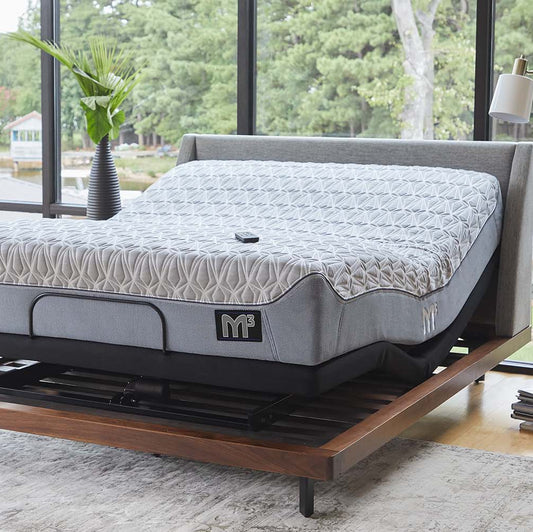
An adjustable base makes this easy to dial in. Most models include preset comfort positions, and many manufacturers label one of them an anti-snore preset; that is a comfort position, not a medical device or a treatment. It simply raises the head a few degrees so you are not flat, and some sleepers find it more comfortable than propping pillows.
If a base is not in the cards, a wedge pillow does something similar for far less money. The important detail is that the incline should start at your torso, not just under your head.
Stacking regular pillows tends to bend your neck forward instead of raising your whole upper body, which narrows the airway rather than opening it.
Our adjustable bases collection covers the range if you want to compare options.
Heat, Congestion, and the Stuff That Makes Snoring Worse
This is the part people skip, and it is the part we know best at BEDGEAR. Snoring gets worse in a hot, stuffy, allergen-heavy bedroom, and all three of those are fixable. In fact, we might be able to solve your snoring problem right here, right now.
First and foremost, start with temperature. A warm room and heat-trapping bedding push you toward lighter, more fragmented sleep, and more waking means more time spent in the shallow stages where snoring tends to be loudest.
Therefore, breathable sheets and a pillow that moves air instead of storing it keep the surface cool to the touch and reduce heat buildup through the night. We also have a guide on how airflow affects sleep quality that dives a little deeper if you're a big fan of the science.

Then, well, there is congestion, which narrows the airway before air ever reaches your throat. Allergens living in your bedding are a common and overlooked contributor, especially if your snoring is seasonal or worse at home than it is on vacation.
Washing pillowcases and sheets weekly, using a washable pillow protector, and keeping the room dust-free all help; our bedroom cleaning guide has the full routine.
A few other habits move the needle here:
- Alcohol close to bedtime relaxes airway muscles more than usual, which is why snoring is often worse after a night out.
- Dry indoor air irritates nasal passages and thickens mucus; a humidifier in winter can help.
- Sedating medications can have a similar relaxing effect on airway tissue, so it is worth asking a pharmacist about timing.
- Dehydration makes secretions stickier, which adds to the vibration.
None of these are dramatic on their own. Stacked together, and on the same night, they explain a lot of the variation in how loud snoring gets from one evening to the next.
Why Snoring Often Starts or Worsens Around Menopause
Here is something that does not get discussed nearly enough, and we're ready to start moving the needle in this department. Plenty of women who never snored in their lives start snoring in their forties and fifties, and it catches them completely off guard. If you have been searching what causes snoring in females and coming up with articles clearly written for someone else, this section is for you.
The mechanism is the same, but the timing tracks with hormonal change. Shifting estrogen and progesterone levels during perimenopause and menopause can affect muscle tone in the upper airway, and lower muscle tone means more of the tissue relaxation that produces snoring. Nasal congestion and changes in body composition often move in the same direction at the same time.
Then there is the sleep fragmentation problem. Hot flashes and night sweats break sleep into pieces, and more time in lighter sleep stages usually means more audible snoring. It compounds; the waking makes the snoring more noticeable, and the snoring makes the waking harder to recover from.
We covered the temperature half of this in our guides to the best cooling pillow for menopause and the best mattress for menopause and night sweats. This way, you can find the bedding solutions you need to sleep comfortable.
Still, bedding will not touch the hormonal side of this; nothing in your bedroom will. What it can do is stop adding heat to a night that is already running warm. If night sweats are part of the picture, our guide on how to prevent night sweats is the companion piece.
And if snoring is new, loud, or paired with exhaustion during the day, bring it up with your doctor rather than filing it under normal aging. At the end of the night, only a trusted professional can help you find the answers you need hormone-wise.
When Snoring Is Something More
Snoring on its own is not a diagnosis. Lots of people snore without having sleep apnea, and one loud night after a late dinner and a glass of wine tells you very little. So, let us be abundantly clear about what does and does not warrant attention.
The pattern around the snoring matters more than the snoring itself. Loud, nightly snoring paired with gasping, choking, or observed pauses in breathing is a different situation. So is waking up with a headache, feeling exhausted no matter how many hours you logged, or falling asleep during the day when you did not mean to.
If any of that sounds familiar, talk to a doctor. We are a bedding company; we can help with pillow loft and airflow and temperature, and we cannot tell you what is happening in your airway. A sleep evaluation can, and it is a straightforward process.
Our overview of sleep apnea and sleep quality covers what to expect if you go that route.
If You're the Partner Who Can't Sleep
Snoring is actually a two-person problem, and the person not making the noise is often the one losing more sleep. That deserves saying out loud, because it usually gets treated as a joke right up until somebody moves to the couch, and this can start to bring about the dreaded sleep divorce.
Protecting your own sleep is fair game while the other fixes take time. White noise or a fan gives your brain a steady sound to settle into rather than an unpredictable one.
Good earplugs are underrated. Separate blankets solve the tug-of-war and let each of you run at a different temperature, which matters more than people expect.

On the encouragement side, keep it practical rather than personal. Suggest side sleeping, check whether their pillow has gone flat, keep the room cool, and deal with allergies if they are in play.
If the snoring is loud and nightly and comes with gasping or daytime exhaustion, the single most useful thing you can do is help them book the appointment. Framing it as looking after their sleep tends to land better than framing it as looking after yours.
How to Reduce Snoring Starting Tonight
At the end of the night, learning how to reduce snoring is less about one big fix and more about stacking small ones. Sleep on your side, get your pillow loft matched to that position, raise the head of the bed slightly, and keep the room cool and the bedding breathable so you are not waking up half a dozen times anyway.
Give it a couple of weeks before you judge the results, and change one thing at a time so you know what actually worked. Most people find that position and pillow height do the heavy lifting, with temperature and congestion accounting for why some nights are still louder than others.
And if none of it moves the needle, that is useful information too! Snoring that persists through every reasonable adjustment, especially with gasping or daytime exhaustion attached, is a conversation for your doctor rather than another trip to the pillow aisle.
Frequently Asked Questions About How to Reduce Snoring
If you have more questions about snoring, we don't blame you, it's a fascinating subject! Stick around to find answers below.