

-
 BreathableRegular price $99.99Sale price $99.99 Regular priceUnit price per
$99.99 -
 Regular price $249.99Sale price $249.99 Regular priceUnit price per
$249.99 -

-

 Regular price $119.99Sale price $119.99 Regular priceUnit price per
$119.99 -
 Regular price $179.99Sale price $179.99 Regular priceUnit price per
$179.99 -
 Regular price $1,499.99Sale price $1,499.99 Regular priceUnit price per
 -
 Independent AdjustmentsRegular price $2,299.00Sale price $2,299.00 Regular priceUnit price per
 -
 Regular price $1,299.00Sale price $1,299.00 Regular priceUnit price per
 -
 Regular price $2,049.00Sale price $2,049.00 Regular priceUnit price per


Key Features of Our Sleep Products for Snoring
Sleep Position Support
Pillows and adjustable bases help you build a sleep setup around the position that works best for you.
Anti-Snore Presets
BEDGEAR Flex adjustable bases make head elevation available with the push of a button.
Personalized Pillow Heights
Multiple loft options help match your pillow to your body type and sleep position.
Side-Sleeper Comfort
Curved pillow designs create room around the shoulder while supporting the head and neck.
Independent Adjustability
Split-head bases let one sleeper elevate without moving their partner.
Breathable Performance
Airflow-focused fabrics and construction help keep the rest of your sleep setup comfortable while you dial in your position.
Start With Position The Best Sleep Positions for Snoring Before buying another gadget, look at the position you spend eight hours holding.
Does Sleep Position Affect Snoring?
Yes, and this is one of the more practical places to start, so we want to get after it right away.
In fact, snoring often becomes more noticeable while sleeping on your back. In that position, gravity can encourage tissues around the tongue and throat to move backward and narrow the airway. Side sleeping changes that relationship and may reduce snoring for people whose snoring is position-dependent.
So if you are searching for the best position to sleep to avoid snoring, the answer is usually not something exotic.
Start on your side.
Simple? Yes.
Staying there for the next seven or eight hours? That is where your sleep setup starts earning its keep.
Why Do I Snore More When Sleeping on My Back?
Back sleeping is comfortable for plenty of people, but it can be less friendly to an already narrow airway.
Gravity is working straight backward. If the tongue and surrounding soft tissue move with it, airflow gets more restricted and vibration can increase. That is one reason snoring is commonly louder or more frequent in the supine, or face-up, position.
That does not mean every back sleeper needs to abandon the position forever. Changing your pillow height or elevating the upper body may also change how you breathe while lying on your back.
For the full breakdown, our How to Reduce Snoring guide covers sleep position, pillows, elevation, and the difference between ordinary snoring and signs worth discussing with a healthcare provider.
Get the Height Right Pillows for Side Sleepers Who Snore The word “anti-snore” on a pillow matters less than whether the pillow actually fits the person sleeping on it.
Can the Right Pillow Help With Snoring?
A pillow cannot diagnose or treat the reason somebody snores; we need to start by getting that out of the way first.
What it can do is help support the head and neck in the sleep position you are trying to maintain.
That is especially important for side sleepers. A pillow that is too low lets the head drop toward the mattress. Too high and it pushes the head the other way. The goal is enough loft to fill the space created by the shoulder and keep the head comfortably supported. BEDGEAR already builds its pillow lineup around different body types, sleep positions, and heights rather than treating every sleeper like the same-shaped human.
So when somebody searches for the best anti-snore pillow for side sleepers, our recommendation is not to hunt for a magic anti-snore label.
Get the fit right first.
Want to learn more about anti-snore pillows? We have a comprehensive guide that covers how pillows can improve (or worsen) snoring.
Raise the Question Does Elevating Your Head Help With Snoring? Sometimes a few degrees make more sense than another pillow stacked on top of the first one.
Sleeping Elevated and Snoring
Head and upper-body elevation is another positional strategy worth considering.
Clinical research has found that inclined sleeping can reduce snoring for some people, and Mayo Clinic includes raising the head of the bed among its practical recommendations for snoring.
The important distinction is elevating the sleep surface, not simply building a pillow skyscraper underneath your neck.
Stacking several pillows can bend the neck while leaving the rest of the upper body flat. An adjustable base raises a larger section of the sleep surface and gives you more control over the actual angle.
That is where the adjustable bed starts making a lot more sense.
Elevation on Demand Adjustable Beds With Anti-Snore Positions One button beats rearranging four pillows every night.
What Is the Anti-Snore Position on an Adjustable Bed?
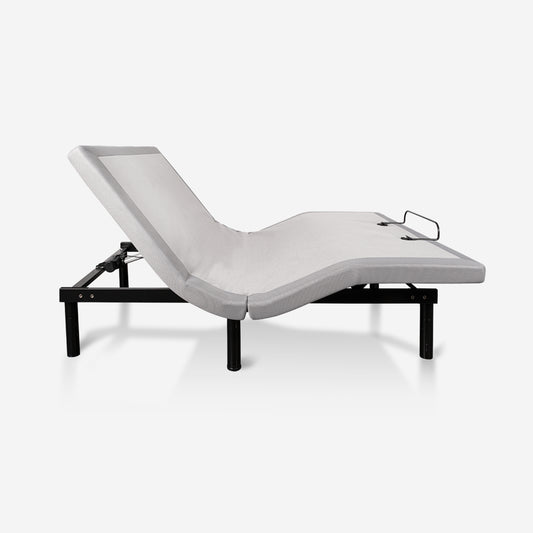
An anti-snore adjustable bed position raises the head and upper portion of the sleep surface.
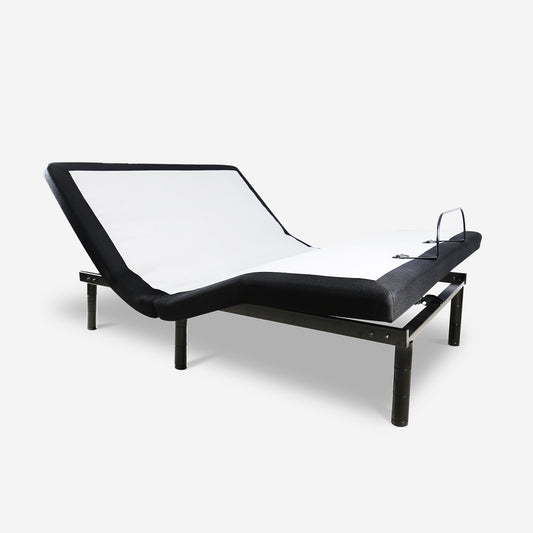
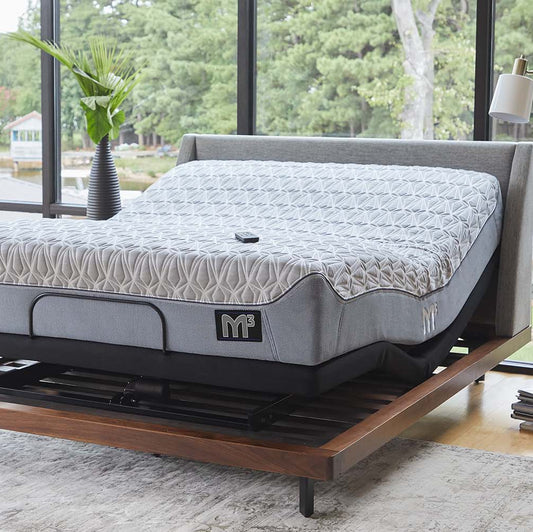
The idea is positional: create elevation without manually rebuilding the bed every night. BEDGEAR Flex adjustable bases include built-in anti-snore presets alongside other positioning options such as Zero Gravity.
It is a comfort and positioning feature, not a medical treatment.
But if you are already experimenting with sleeping elevated, having a repeatable position available from a remote is a lot easier than trying to recreate yesterday's successful pillow stack by memory.
When the Snoring Is Not Yours Adjustable Sleep Positions for Couples One person wants elevation. The other person just wants their side of the bed left alone.
When Your Partner Snores
Snoring has a funny way of becoming a two-person sleep problem, especially if you’ve seen your loved one flop onto their back recently.
Sure, one person is making the noise, but the other one is very aware of it.
If elevation helps the snoring sleeper but their partner prefers sleeping flat, a traditional adjustable bed can create a new negotiation: whose position wins?
That is where a split-head system gets interesting.
Flex SH: Independent Head Positioning
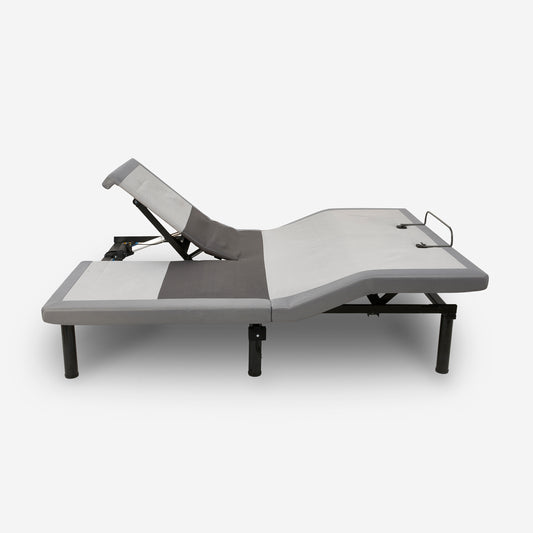
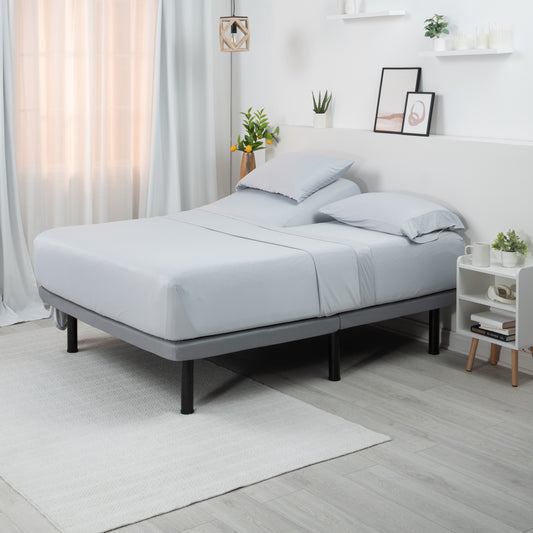
The Flex SH Split Head Adjustable Base allows each sleeper to independently adjust the head and lumbar area on their side. It includes Anti-Snore positioning and separate controls, so one person can elevate without automatically moving the other person's side with them.
Snorer elevates.
Partner stays where they are.
Diplomacy restored.
This is also a good option for couples who have different preferences beyond snoring, because the independent adjustment does not stop being useful once everybody falls asleep.
Start Simple Which Sleep Product Should You Try First? Snoring does not automatically mean you need to rebuild the entire bedroom.
Match the Product to the Position Problem
Start with what happens when you sleep.
If you snore mostly while sleeping on your back:
Try side sleeping first.
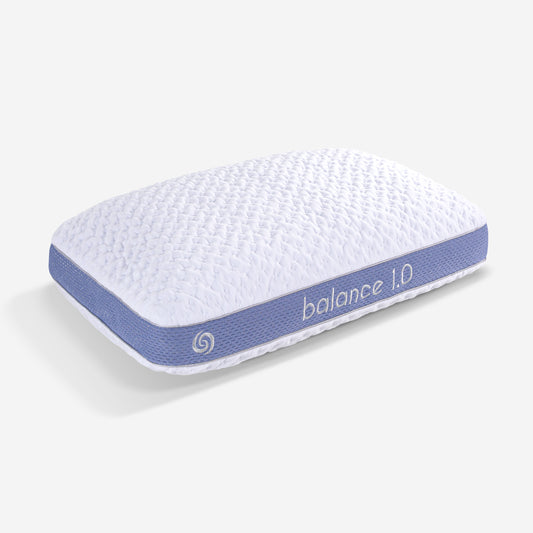
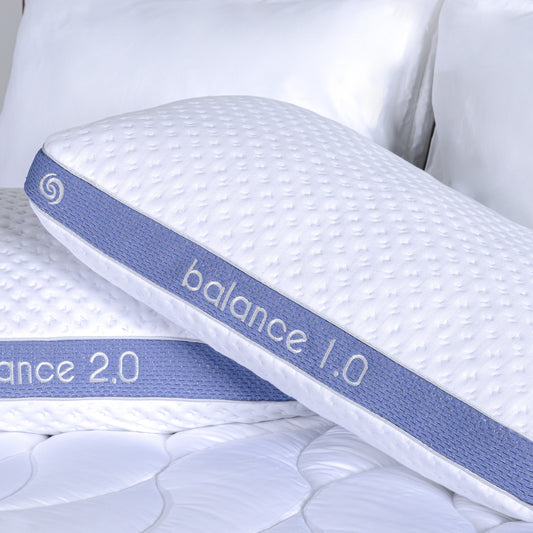
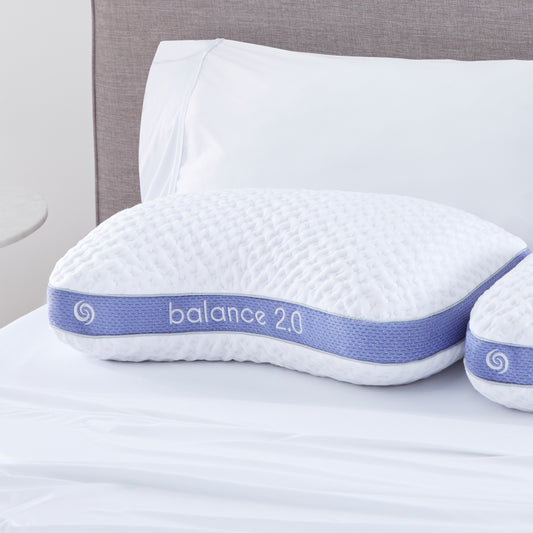
If side sleeping feels awkward, look at your pillow fit. A properly sized Balance Performance® Pillow or a Cuddle Curve pillow can make the side position easier to maintain.
If you already sleep on your side but your pillow feels wrong:
Start with loft and shape.
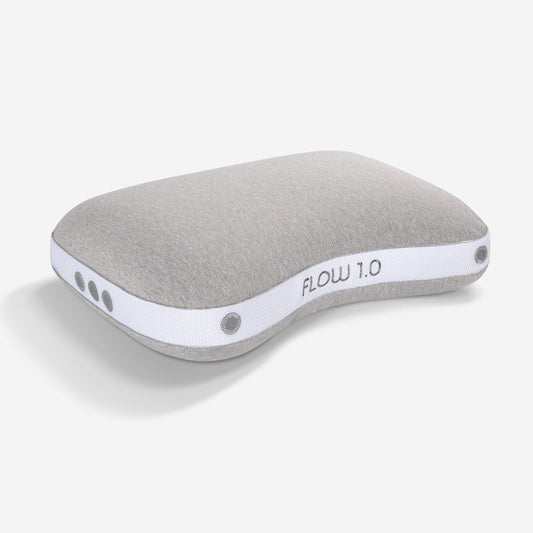
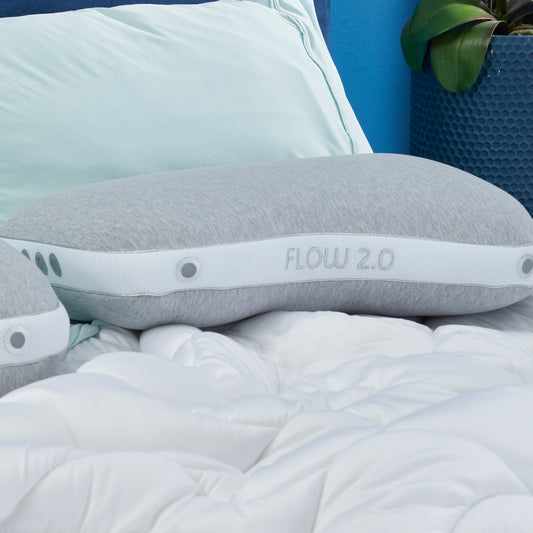
Balance gives you four pillow heights. Flow and Storm Cuddle Curve give the shoulder more room while supporting a side-sleeping setup.
If you want to try head elevation:
Move into an adjustable base.
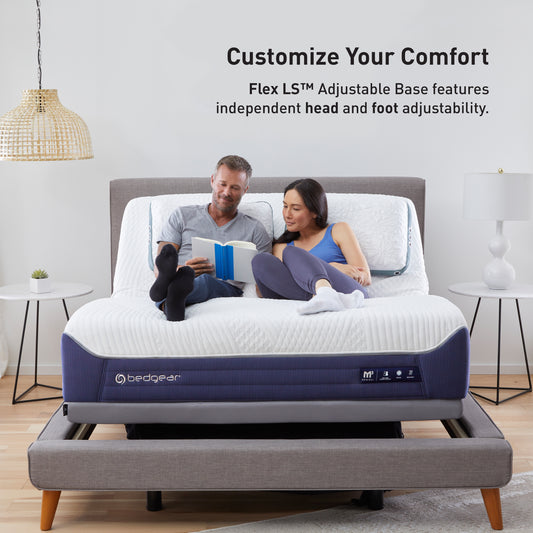
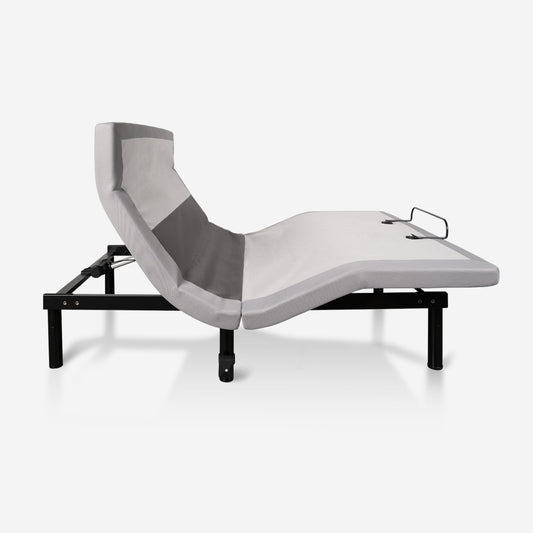
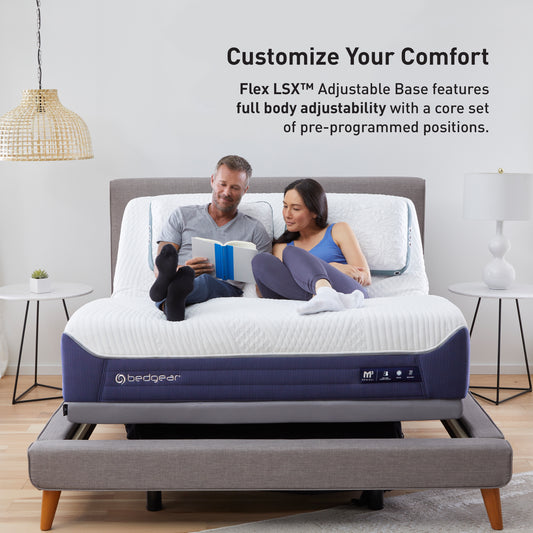
Flex L gives you the essential Anti-Snore preset. Flex LS adds massage. Flex LSX adds more adjustment zones.
If you share a bed and only one person wants elevation:
The Flex SH Split Head Adjustable Base is the cleanest answer because each side controls its own head position.
The point is not to buy the most complicated setup.
It is to solve the actual positioning problem.
BEDGEAR's How to Reduce Snoring guide can help you work backward from the way you currently sleep before deciding what to change.
Questions Common Questions About Sleep Position and Snoring The practical stuff people usually start Googling after their partner nudges them awake.
What Is the Best Position to Sleep in to Avoid Snoring?
Side sleeping is commonly recommended for people whose snoring becomes worse on their back. Back sleeping can allow gravity to narrow the airway more easily, while moving onto the side may reduce positional snoring. It will not resolve every cause of snoring, but sleep position is one of the simpler variables to test.
Why Do I Snore When Sleeping on My Back?
Snoring can become more frequent or louder on the back because gravity can cause tissues around the tongue and throat to move backward and narrow the airway. For positional snorers, moving onto the side may help reduce that effect.
Does Sleeping on Your Side Help With Snoring?
It can. Side sleeping is commonly recommended as a positional strategy for snoring because it can help keep the airway from narrowing as much as it may while lying flat on the back.
What Is the Best Anti-Snore Pillow for a Side Sleeper?
There is no single pillow that can guarantee somebody will stop snoring. For a side sleeper, focus on getting enough pillow height to support the space between the shoulder and head without pushing the neck noticeably upward or allowing it to drop downward. BEDGEAR offers pillows in different heights and Cuddle Curve designs specifically shaped around side-sleeping comfort.
Do Anti-Snore Pillows Work?
Some pillows may help positional snoring by changing or supporting head position, but results depend on why the person snores in the first place. Research has found that changing head position with a pillow can reduce snoring severity in some participants, but a pillow should not be viewed as a treatment for sleep apnea or another underlying medical condition.
Does Elevating Your Head Help With Snoring?
It may. Both clinical research and established medical guidance support head or upper-body elevation as a positional strategy that can reduce snoring for some sleepers. An adjustable base provides a more controlled way to create that elevation than stacking several pillows underneath the head.
What Is the Anti-Snore Position on an Adjustable Bed?
The Anti-Snore position raises the head section of the bed to create an elevated upper-body sleeping position. BEDGEAR Flex bases include built-in Anti-Snore presets so sleepers can return to that position without manually adjusting the base each night.
Is Zero Gravity the Same as the Anti-Snore Position?
No. Both involve elevation, but they are designed around different positioning goals. BEDGEAR's Anti-Snore preset focuses on head and upper-body elevation, while Zero Gravity also changes the leg position to redistribute the body's weight across the sleep surface.
Can Side Sleepers Use an Adjustable Bed?
Yes. Side sleepers can use adjustable bases, although the ideal angle may differ from what feels comfortable for a back sleeper. BEDGEAR recommends pairing elevation with enough shoulder and hip pressure relief and adjusting the position until it feels natural on the side.
When Should Snoring Be Checked by a Doctor?
Snoring by itself is common, but frequent loud snoring combined with breathing pauses, gasping or choking during sleep, or excessive daytime sleepiness can be associated with sleep apnea. Those symptoms are worth discussing with a healthcare provider rather than relying on a pillow or adjustable base alone.