Sleep Is a Performance Variable, Not Just a Recovery Tool
Most athletes treat sleep like a passive reset button. Train hard, sleep, repeat. That framing undersells what is actually happening. Sleep is not a break from performance; it is where performance gets manufactured. Muscle tissue is rebuilt. Motor patterns are consolidated. Hormones that drive adaptation are released. The nervous system resets. None of that happens in the gym.
Video: a short overview of how sleep quality feeds into athletic recovery and next-day readiness.
That reframe matters because it changes how seriously you take it. A poor training session is frustrating. A night of bad sleep usually just gets accepted. But consistently poor sleep drags on performance the same way consistently bad training does; it is just harder to see in real time.
Understanding how better sleep improves performance gives you the framework to treat it like the variable it is, and to do something about it.
"There's a ton of strong science about sleep basically being a superpower; how it can supercharge everything athletes need to be physically and mentally ready."Leigh, Performance Coach and BEDGEAR Partner
Muscle Recovery and Growth: The Deep Sleep Window
The most direct performance benefit of better sleep is what happens to muscle tissue during it. Slow-wave deep sleep is when the pituitary gland releases most of its daily growth hormone.2 (source 2, opens in a new tab) Growth hormone supports muscle protein synthesis, repairs microtears from training, and aids connective tissue recovery. Cut deep sleep short and you cut that process short.
This is why duration matters, but quality matters just as much. You can be in bed for eight hours and still not get adequate deep sleep if the environment is working against you; a warm mattress, ambient noise, or light exposure can pull the body out of slow-wave sleep before the full hormonal release happens. More hours in bed is only part of the equation.
What Disrupts Deep Sleep for Athletes
Athletes training at high intensity often carry elevated core temperature into the night. That residual heat can delay or compress the body's natural temperature drop, which is the trigger for deep sleep onset. A sleep surface that traps heat makes the problem worse.
Performance bedding built with airflow and moisture-wicking materials, like our Dri-Tec® and Ver-Tex® fabrics, helps manage the microclimate around the body so temperature does not become a barrier to the stages where recovery happens. Our guide to sleep microclimate covers why that matters.
Alcohol, late-night eating, and high nervous system arousal after evening training all have similar effects; they fragment deep sleep architecture even when total duration looks fine. Optimizing recovery means looking at the whole picture, not just hours logged.
Reaction Time, Decision-Making, and the Cognitive Edge
Sport is not purely physical, especially in games with a lot of reading and reacting built in. Most performance breakdowns happen in the space between stimulus and response: a defender reads the play half a second late, a quarterback holds the ball a beat too long, a sprinter misreads the gun. Reaction time and split-second decisions are what separate elite from good, and both are sensitive to sleep.
Sleep deprivation degrades processing speed even in people who feel adapted to running short. Research consistently finds that the subjective sense of functioning normally after sleep restriction does not match objective performance; people feel fine and still perform meaningfully worse. That is a difficult combination in sport, where the margin for error is small and nothing external tells an athlete their edge has dulled.
Motor Skill Consolidation Happens Overnight
There is another cognitive dimension that does not get discussed enough: motor learning. The neural patterns laid down during skill practice are consolidated during sleep, particularly during REM in the later hours of the night. Cut sleep short and you do not just feel worse the next day; you consolidate less of what you practiced.
The technical improvements from training end up less available to you. Consistently high sleep quality is part of what lets technical development compound over a career.
For athletes working on mechanics, timing, or sport-specific movement, protecting the back end of the night matters specifically because REM is concentrated there. Eight hours beats seven not just for the extra hour of rest; it includes more of the architecture where skill consolidation happens.
How Better Sleep Improves Performance Across Metrics
Research on sleep and athletic performance spans multiple sports and performance domains. The table below summarizes where the gains show up and what appears to drive them.
| Performance Metric | Effect of Better Sleep | Mechanism |
|---|---|---|
| Sprint Speed | Stanford study reported faster 282-foot sprint times with 10-hour sleep extension | Faster neuromuscular response; less fatigue accumulation |
| Shooting Accuracy | Free throw and three-point accuracy improved by roughly 9% in the same study | Motor skill consolidation during REM sleep |
| Reaction Time | Faster with adequate sleep; degrades quickly with even mild restriction | Processing speed; reduced cognitive load |
| Strength Output | Peak power tends to decline with sleep deprivation and recover with adequate sleep | Growth hormone release; neuromuscular efficiency |
| Endurance Capacity | Time to exhaustion falls with sleep restriction while perceived effort rises | Glycogen utilization; cardiovascular output |
| Injury Risk | Adolescent athletes sleeping under 8 hours showed higher injury rates | Impaired tissue repair; degraded proprioception and motor control |
| Mood and Motivation | Sleep-extended athletes reported better mood, energy, and training motivation | Cortisol regulation; nervous system recovery |
Scroll sideways to see all columns.
These gains are not the result of sleeping more for a week before a competition. They compound across consistent habits built into the training cycle itself. Sleep is a chronic input, not an acute one; the athletes who treat it that way get the cumulative benefit.
Injury Risk and the Sleep Connection
One of the clearer findings in sleep and sports science is the relationship between sleep duration and injury risk. In a study of adolescent athletes, those averaging fewer than eight hours per night showed markedly higher rates of musculoskeletal injury than those sleeping more.3 (source 3, opens in a new tab) The mechanisms are multiple and they compound each other.
Physically, inadequate sleep means incomplete tissue repair between sessions. Microtrauma from hard training accumulates without enough recovery time. Cognitively, the degraded reaction time and proprioception from sleep loss reduce an athlete's ability to move safely under fatigue. Both channels raise injury probability at the same time, which is why sleep is one of the higher-return interventions in any injury prevention program.
What Better Sleep Actually Looks Like for Athletes
Better sleep for athletes is not simply more hours; it is higher quality sleep in the right conditions. The environment, the surface, and the timing all shape how much of those hours converts into recovery. Performance sleep is a system, and it starts with understanding what is limiting sleep quality in the first place.
Duration: How Many Hours Do Athletes Actually Need?
The general recommendation for adults is seven to nine hours. For athletes under heavy training load, the evidence leans toward the upper end; eight to ten hours supports more complete recovery cycles and extends the REM and deep sleep stages where adaptation happens. Sleep extension studies, where athletes deliberately increased nightly duration, have produced consistent performance gains across several sports.
Naps are a legitimate tool too. A 20 to 30 minute nap in the early afternoon can partly offset a short night without disrupting the following night's sleep architecture, which makes it practical around competition travel and schedule disruption.
Quality: The Sleep Surface Matters More Than Most Athletes Realize
You can be in bed for nine hours and still under-recover if the sleep surface is working against you. A mattress that traps heat, a pillow that is wrong for your sleep position, or sheets that hold moisture all create conditions that fragment sleep without the athlete ever fully waking. The disruption happens below the threshold of awareness and above the threshold of impact.
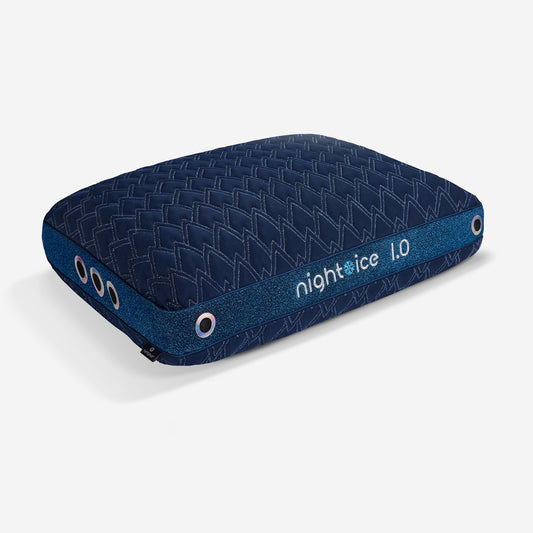
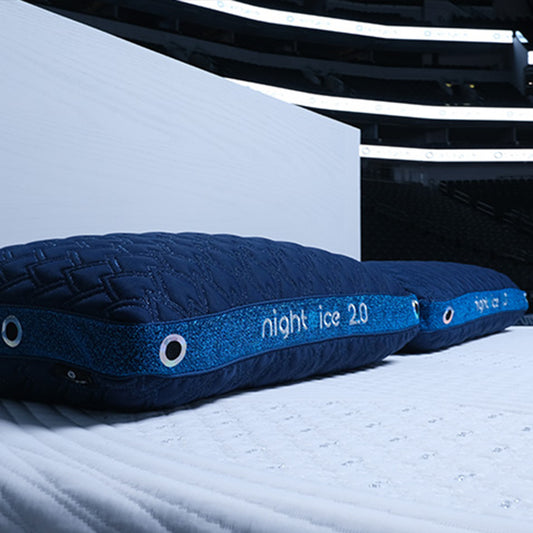
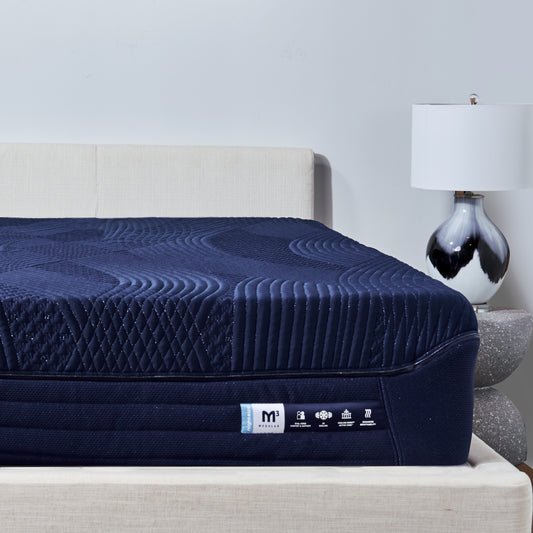
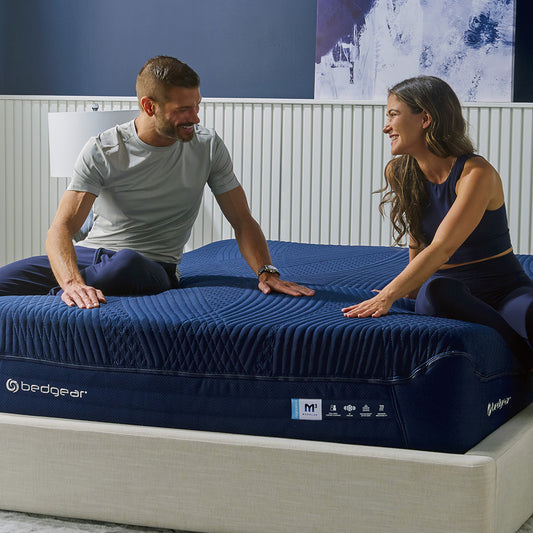
Our Performance® Mattresses are engineered around the variables that matter for athlete sleep: spinal alignment at high-load joints, airflow through the sleep surface, and moisture management at the skin. The pillow system spans loft profiles from 0.0 to 3.0, calibrated by sleep position and body type.
Getting the surface right is one of the most direct ways to improve sleep quality without changing anything else. For more on the mechanism, see our closer look at how sleep affects muscle recovery.
Sleep Better. Perform Better. It Really Is That Direct.
Our Performance® Sleep System is built around what athletes need from a sleep surface: support, airflow, and temperature management working together all night.
Consistency: The Circadian Rhythm Factor
Sleep timing is its own variable. The circadian rhythm governs sleep architecture, and going to bed at wildly different times disrupts the internal clock and degrades quality even when total duration looks fine.
Athletes who keep a consistent sleep and wake schedule, including on off-days, tend to get more out of every hour. The body prepares for sleep; give it a consistent cue and it gets more efficient at the whole process.
Travel and competition schedules make this genuinely hard. Eastward travel is tougher than westward. Late competition times push everything back. There is no perfect answer in a busy calendar, but treating sleep timing as a recovery variable worth protecting, rather than something that happens around everything else, produces better outcomes over a season.
How Better Sleep Improves Performance: The Short Version
Better sleep improves athletic performance across the metrics that matter: strength, speed, reaction time, endurance, decision-making, and injury resilience. The mechanisms are reasonably well established. Growth hormone drives muscle repair during deep sleep. Motor skills consolidate during REM. Cognitive processing speed depends on sleep quality. Injury risk is lower in athletes who consistently sleep eight or more hours.
The gains from getting sleep right are not marginal. For most athletes it is the highest-leverage recovery intervention available, and also the one that gets the least intentional attention. Treat it like a training variable, build the right environment for it, and the compound effect shows up in performance over time.
How Can Better Sleep Improve Performance? FAQs
Still have questions about how better sleep improves performance? Here are the ones that come up most.
How Can Better Sleep Improve Performance?
How Much Does Sleep Affect Athletic Performance?
Does Sleep Help With Muscle Recovery and Growth?
What Happens to Athletic Performance When You Don't Sleep Enough?
How Does the Sleep Environment Affect Athletic Performance?
Sources
- Mah, C. D., Mah, K. E., Kezirian, E. J., & Dement, W. C. (2011). The effects of sleep extension on the athletic performance of collegiate basketball players (opens in a new tab). Sleep, 34(7), 943-950.
- Van Cauter, E., & Plat, L. (1996). Physiology of growth hormone secretion during sleep (opens in a new tab). The Journal of Pediatrics, 128(5 Suppl), S32-S37.
- Milewski, M. D., et al. (2014). Chronic lack of sleep is associated with increased sports injuries in adolescent athletes (opens in a new tab). Journal of Pediatric Orthopaedics.