Most people blame poor sleep on stress, noise, or a bad schedule. Moisture rarely makes the list. But your body produces a real amount of heat and perspiration every night, and when that moisture has nowhere to go, your sleep cycles start paying for it, stage by stage, without you realizing what is happening.
The frustrating part is that moisture disruption does not announce itself. You do not always wake up drenched. You wake up tired, a little stiff, wondering why eight hours did not feel like enough. The answer is often in your bedding, specifically in how well it handles what your body puts out overnight.
Sweating at Night Is Normal; Trapped Moisture Is the Problem
Let us get this out of the way first: sweating during sleep is not a sign something is wrong. Your body releases heat and moisture as part of temperature regulation. This happens in cool rooms, and it happens even if you do not consider yourself a hot sleeper.
The problem starts when that moisture cannot escape. Dense fabrics absorb sweat but dry slowly. Non-breathable protectors trap humidity underneath them. Tight weaves block airflow and hold warmth close to your skin. Once moisture is stuck in your sleep environment, it creates conditions that make every sleep stage harder to reach and harder to stay in.
Your body needs to drop its core temperature by roughly one to two degrees Fahrenheit to initiate and maintain deep sleep. Trapped moisture works against that process all night long.
How Sleep Stages Work, and Why Moisture Conditions Matter
Sleep is not one long continuous state. It cycles through distinct stages, each with a specific job. Light sleep is the entry point. Deep sleep is where physical repair happens. REM handles memory consolidation and emotional regulation. A complete cycle runs roughly 90 minutes, and your body needs four to six of them a night to recover properly.
Each stage has different environmental requirements. Light sleep is sensitive to small disruptions. Deep sleep needs physical stillness and thermal stability. REM depends on consistent conditions to sustain itself. Moisture interferes with all three, just in different ways.
What Moisture Does to Light Sleep
Light sleep is your entry point into the cycle, and it should be a smooth one. Your nervous system is still winding down, so even small signals can keep you from sinking deeper. A damp surface raises skin temperature slightly. Clammy fabric creates subtle discomfort. The body makes small positional adjustments to escape it.
None of those is dramatic on its own. Together they extend sleep onset and keep you in lighter stages longer than you should be. That is why people say they are exhausted but cannot fall asleep. Their body is ready; their sleep environment is fighting them.
What Moisture Does to Deep Sleep
Deep sleep is where physical recovery happens: muscle repair, immune function, tissue regeneration. It is also the stage most vulnerable to disruption from the sleep environment.
When moisture accumulates, fabric sticks to skin, heat intensifies, and the body senses instability. Rather than staying under, the brain pulls you back into lighter sleep to regain control of comfort. You do not fully wake; you just lose the stage your body needed most. The next morning that shows up as stiffness, slower recovery, and the familiar sense of having slept without feeling rested.
What Moisture Does to REM Sleep
REM is your mental recovery window. Focus, mood, emotional regulation, and memory consolidation all lean on it. It also appears most in the later cycles of the night, which makes it especially sensitive to conditions that build up over hours.
By the time your body reaches its third or fourth cycle, moisture has had hours to accumulate. Damp fabric, elevated surface temperature, and disrupted airflow create the kind of instability that fragments REM or cuts it short. Over time that compounds. Shortened REM does not just leave you tired; it affects how sharp you feel, how you handle stress, and how well you perform the next day.
Moisture and Heat Are the Same Problem
They are not two separate issues. Damp fabric holds warmth closer to the skin, blocking the heat dissipation your body depends on overnight. More moisture means more heat; more heat means more sweating. The cycle runs all night unless your bedding is built to break it.
Why Tossing and Turning Is Often a Moisture Response
Most people assume they toss and turn because they cannot get comfortable. Sometimes that is true. More often the body is doing something specific: trying to escape damp areas, find a drier surface, or release trapped heat. Every reposition is a response to a sleep microclimate that is not working in your favor.
The problem is that each movement also breaks sleep continuity. You pull yourself out of deeper stages, reset the cycle, and lose recovery time you cannot get back. When moisture is managed properly, the body does not need to reposition as often. Sleep gets calmer, cycles run longer, and recovery actually happens.
Moisture-Trapping vs. Moisture-Wicking: The Real Difference
Not all fabrics handle moisture the same way, and the distinction matters more than most people realize. Absorbing moisture is not the same as managing it. Fabric that soaks up sweat but dries slowly just holds that humidity against your skin all night, getting heavier, warmer, and less breathable as the hours pass.
Moisture-wicking fabrics work differently. They pull moisture away from the skin, spread it across the fabric surface, and let it evaporate quickly. The sleep surface stays drier, skin temperature stays lower, and the conditions that disrupt each stage are removed before they become a problem. That is the sleep performance difference. The table below lines the two approaches up directly.
| Property | Moisture-Trapping | Moisture-Wicking |
|---|---|---|
| How it handles sweat | Absorbs and holds it near the skin | Pulls it away and spreads it for evaporation |
| Feel over time | Heavy, clammy, warm | Light, dry, breathable |
| Effect on skin temperature | Raises it; blocks heat dissipation | Lowers it; supports the body's temperature drop |
| Impact on sleep stages | Fragments deep sleep and REM | Supports full, uninterrupted cycles |
| Morning outcome | Stiff, unrested, sluggish | Recovered, rested, ready |
Scroll sideways to see both columns.
Every Layer of Your Sleep System Plays a Role
Moisture does not come from one source and it does not sit in one place. Your head and neck generate a lot of heat and perspiration overnight; so do your torso and lower body. Managing it takes every layer working together: pillow, sheets, and protector.
Your Pillow Is a Moisture Problem Waiting to Happen
Most people do not think of pillows as a moisture management issue. They should. Your head and neck generate substantial heat and humidity overnight, and a pillow that compresses, blocks airflow, or holds moisture near your face can disrupt REM cycles faster than almost anything else in the sleep environment.
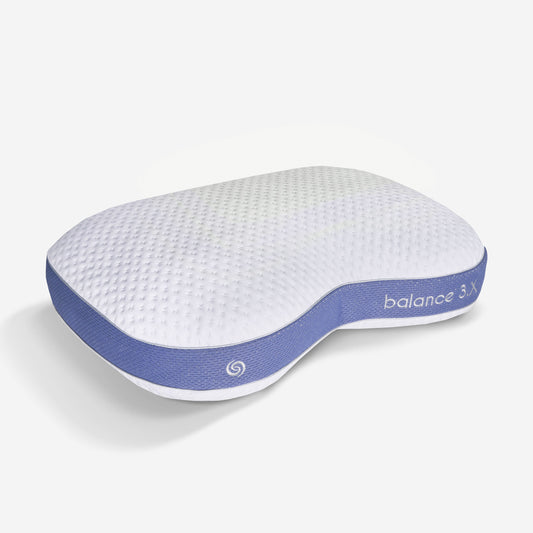
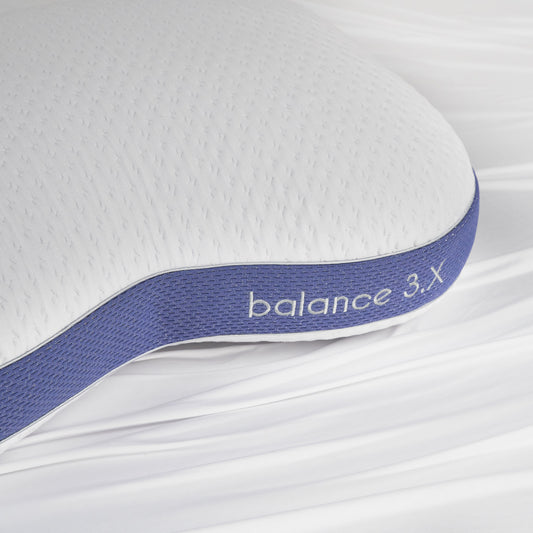
Our Performance® Pillows are built to maintain airflow through the core, using breathable fill and covers engineered to move moisture away from the skin. The result is a pillow that stays drier and cooler through the night, and sleep conditions consistent enough to support full cycles.
Sheets Are Your First Line of Defense
Sheets are in direct contact with your skin for the entire night. If they do not handle moisture well, nothing else matters much; you are lying in the problem regardless of what sits underneath.
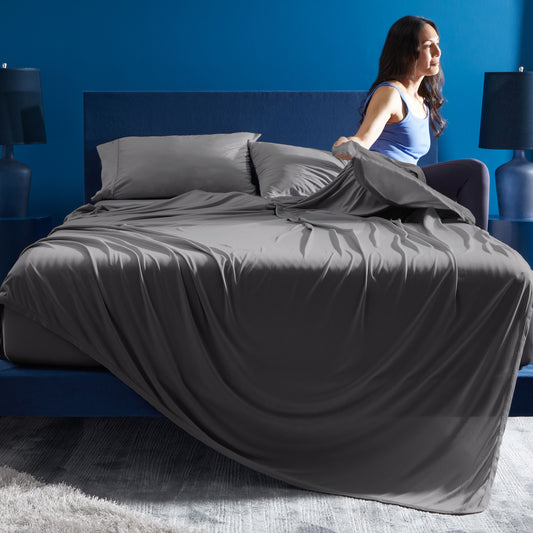
Performance sheets prioritize lightweight construction, breathable weaves, and moisture-wicking fabrics that pull perspiration away from the skin rather than absorbing and holding it. Our sheet lineup is built on exactly that framework. The goal is not a luxury thread count; it is a sleep surface that stays dry from the first hour to the last.
A Bad Protector Makes Everything Worse
A waterproof protector that does not breathe is one of the most common moisture management mistakes. It blocks liquid from reaching the mattress, and it blocks airflow too, trapping heat and humidity in the worst possible place. Everything above it gets warmer and damper as the night goes on.
Our Performance® Protectors are engineered to handle moisture without giving up breathability. Protection and airflow are not a trade-off here; both are built into the same product.
Moisture Management Is a Recovery Strategy
Recovery depends on deep sleep and uninterrupted REM. When moisture disrupts those stages, muscle repair slows, the nervous system does not fully reset, and the next day feels harder than it should. That makes this a performance issue rather than a comfort one.
We build every component of the Performance® Sleep System around this principle. Moisture-wicking fabrics, breathable construction, and engineered airflow across every layer work together to keep conditions stable through the night. When moisture can move and evaporate, sleep stays balanced. When sleep stays balanced, recovery happens.
How Moisture Impacts Sleep Stages: The Takeaway
Moisture impacts sleep stages by making each one harder to reach and harder to hold. It delays sleep onset in light sleep, pulls you out of deep sleep when the surface turns unstable, and fragments REM in the back half of the night when it has had the longest to accumulate.
The fix is not sleeping cooler in the abstract. It is choosing layers that move moisture out instead of holding it in, starting with the surface touching your skin and working down through the protector. Get that right and the stages take care of themselves.
Frequently Asked Questions
Still have questions about moisture and sleep? Here are the ones we hear most.