Adjustable bases have been around for over a century. The zero gravity position, despite how new it can sound, is grounded in decades of postural research from the lads over at NASA themselves. That said, what's changed recently is the accessibility of getting into zero gravity used to mean expensive hospital-grade equipment. Now? Zero gravity is simply a preset on a wireless remote.
The benefits are real, but they're not magic. Some apply broadly; others are more specific to certain sleepers and situations. This guide covers all seven, along with three limitations that matter as much as the benefits themselves. If you want a deeper look at how the position works before diving into what it does, start with the full zero gravity guide.
What Is a Zero Gravity Adjustable Base?
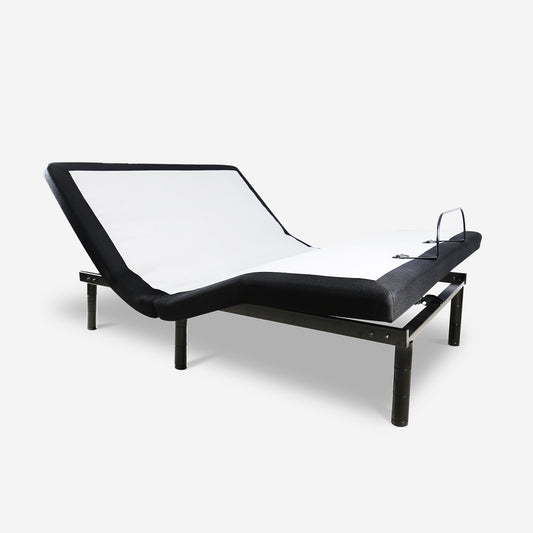
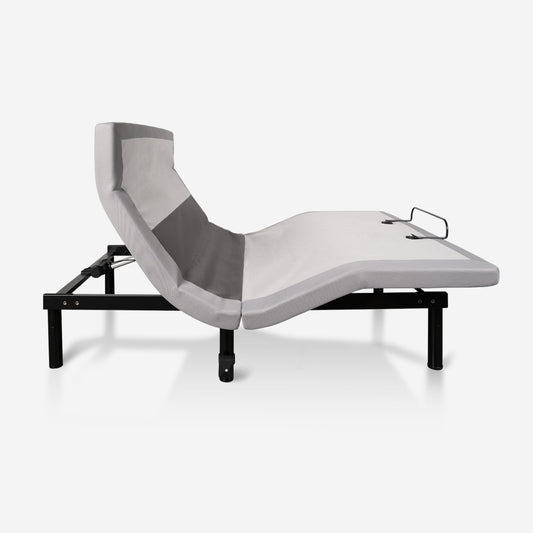
A zero gravity adjustable base is a motorized bed frame that articulates at the head and foot — and in some models, at the neck and lumbar as well — to place the body in a range of positions that a flat surface can't achieve. Zero gravity is one of those positions, and on every BEDGEAR Flex base it's accessible with a single button press.
The name comes from NASA's Neutral Body Posture research: observations from the Skylab program of the natural resting position the body assumes when gravitational forces are removed. In that state, the body settles into a semi-reclined posture with the hips at roughly a 120-degree angle relative to the torso, the head elevated about 30 degrees, and the knees slightly raised.
That research later influenced ergonomic design across multiple industries; in the sleep industry, though, it informs the target angle for the zero gravity preset on adjustable bases. The practical result is a position where no single zone of the body bears a disproportionate share of body weight, which is the foundation for most of the benefits we cover in this guide.
7 Benefits of a Zero Gravity Adjustable Base Bed
These benefits of a zero gravity adjustable base aren't independent of each other. In fact, several are actually connected in ways you might overlook at first.
Examples include better circulation that supports recovery, reduced lumbar pressure allows muscles to relax, and easier breathing leads to deeper sleep. The position works as a system.
Here's how each benefit plays out on its own.
Lumbar Pressure Reduction
Distributes weight away from the lower back
Reduced Snoring
Keeps the airway more open overnight
Better Circulation
Legs above heart level supports fluid drainage
Acid Reflux Relief
Upper body elevation keeps stomach acid down
Improved Breathing
Torso elevation reduces diaphragm compression
Better Recovery
Optimizes the body's overnight repair window
Couples' Independence
Each partner sets their own position
All in one press
Zero gravity is a preset on every BEDGEAR Flex base
1. Zero Gravity Beds May Reduce Lumbar Pressure and Back Discomfort
Sleeping flat on your back sounds neutral, but it isn't. The lumbar spine sits in a natural curve; when the lower body is flat and unsupported, gravity pulls the legs downward and the lumbar absorbs that load through the entire night. For people who wake up stiffer or more uncomfortable than when they went to bed, that sustained compression is often a contributing factor.
Zero gravity addresses it by raising both the head and the knees simultaneously. With the knees elevated, the weight of the lower body no longer pulls the lumbar spine into extension. Weight distributes across the full sleep surface instead of concentrating at the lower back.
The result may be a reduction in overnight lumbar pressure for some sleepers — and muscles alongside the spine that can actually relax rather than compensate through the night. Results depend on sleep position, mattress support, and the underlying cause of the discomfort; this is not a substitute for medical evaluation. For a full breakdown of what the position can and can't do for back pain specifically, see our zero gravity bed for back pain guide.
2. Zero Gravity May Help Reduce Snoring
Snoring is most commonly a positional problem. When you're flat on your back, the tongue, soft palate, and surrounding muscles relax and can fall back toward the throat. The airway narrows; the vibration that causes snoring starts. Gravity is doing most of the work here — and a change in angle can interrupt it.
Elevating the head reduces the opportunity for soft tissue to collapse back and obstruct the airway. A 2022 study published in the Journal of Clinical Medicine found that 30-degree head-of-bed elevation showed meaningful improvement in upper airway obstruction among patients with positional obstructive sleep apnea. Results vary depending on the underlying cause and severity of snoring; the zero gravity position is not a treatment for sleep apnea.
For anyone dealing with diagnosed or suspected sleep apnea, a medical evaluation is the right first step. That said, the BEDGEAR Flex lineup also includes a dedicated anti-snore preset, which is a distinct angle calibrated specifically for airway management. We even offer this setting alongside the zero gravity preset. The zero gravity vs. anti-snore guide covers which one to use and when, and we also have an anti-snore collection that will help you complete your sleep system.
3. Zero Gravity May Support Circulation and Reduce Leg Swelling
Elevating the legs above the heart is one of the oldest recovery techniques in physical therapy — not because it sounds good, but because it works mechanically. Fluid naturally pools in the lower extremities through the day; gravity does that reliably and without any effort. Getting it back up toward the core requires either active muscle movement or a positional assist.
Zero gravity provides that assist passively, through the night. With the legs raised above heart level, fluid that has accumulated in the lower legs may drain more efficiently toward the core. For people on their feet for long stretches, athletes recovering from hard training days, or anyone managing lower-leg swelling, that overnight drain may make a noticeable difference in how the legs feel the next morning.
As always, results depend on the individual; swelling caused by medical conditions requires evaluation from a healthcare provider, and an adjustable base is not a treatment for edema.
4. Zero Gravity May Help With Acid Reflux and Heartburn Overnight
Nighttime acid reflux is a gravity problem... sometimes. Stomach acid is kept in place during waking hours partly because you're upright and gravity is working in your favor. Lie flat, and that mechanical advantage disappears. Stomach acid can travel back up the esophagus more easily — and for people with GERD or frequent heartburn, lying flat often makes symptoms noticeably worse.
Upper body elevation restores some of that gravitational advantage without requiring you to sleep propped up on a pile of pillows, which creates its own neck and shoulder problems. The zero gravity position elevates the torso at a consistent, supported angle so that stomach acid is less likely to move back up the esophagus during sleep.
Health professionals frequently recommend upper body elevation for people with GERD; zero gravity is one of the more comfortable and consistent ways to achieve it. It may reduce symptoms for some sleepers; it is not a treatment for acid reflux and is not a substitute for medical evaluation when GERD is significant or persistent.
5. Zero Gravity May Improve Overnight Breathing
Breathing during sleep is affected by more than just whether your airway is open. The position of the torso influences how much room the diaphragm has to expand; when the upper body is flat, the weight of the chest and abdominal contents can reduce the diaphragm's range of motion slightly.
For healthy sleepers, this is just a minor factor. For people dealing with allergies, respiratory congestion, asthma, or any condition that already limits airway capacity, however, it can be a meaningful one.
The good news? Elevating the torso in zero gravity reduces that compression. The diaphragm has more room to work; the nasal passages tend to drain more effectively at an incline than when flat, which can reduce congestion overnight.
For people who regularly wake up with a stuffed nose or feel like they haven't fully recovered from nighttime breathing difficulties, the positional change may make the sleep environment feel meaningfully different.
As with all the benefits here, results vary; the position is not a treatment for respiratory conditions, and anyone managing asthma, chronic congestion, or breathing-related sleep disruption should work with a physician on those conditions directly.
6. Zero Gravity Supports the Body's Recovery Window
Sleep is when the body does its most significant repair work. Tissue heals. Muscles rebuild. Inflammation responses regulate. The quality of that repair depends not just on how many hours of sleep you get but on how deeply you sleep — and the environment and position you sleep in directly affect that depth.
This is the core of what BEDGEAR means by Sleep Fuels Everything®: sleep isn't passive downtime; it's active recovery, and the conditions you create for it matter.
Zero gravity may support that recovery window in several overlapping ways. Reduced lumbar pressure means the structures in the lower back aren't under sustained load during the hours when they should be recovering. Leg elevation supports circulation, which aids tissue repair throughout the lower body.
Reduced snoring and easier breathing mean the sleep itself is less disrupted, so you get more time in the deep slow-wave sleep stages where most physical restoration actually happens. For athletes and people with physically demanding jobs, those compounding effects can show up in meaningful ways: less morning stiffness, more energy through the day, better performance over time.
For reasons we're trying to change, sleep position is often the last variable people optimize in their recovery routine. Luckily, tt's also one of the easiest to change, and this can improve work and athletic performance.
7. It Gives Couples Independent Control Over Their Sleep Position
This is the benefit that doesn't show up in most zero gravity articles you find online because most adjustable bases just don't offer it. On a standard adjustable base, the head and foot sections move as a single unit. Both partners adjust together or one partner compromises. For couples with genuinely different sleep needs, that's a real limitation: one partner's zero gravity is the other partner's uncomfortable incline.
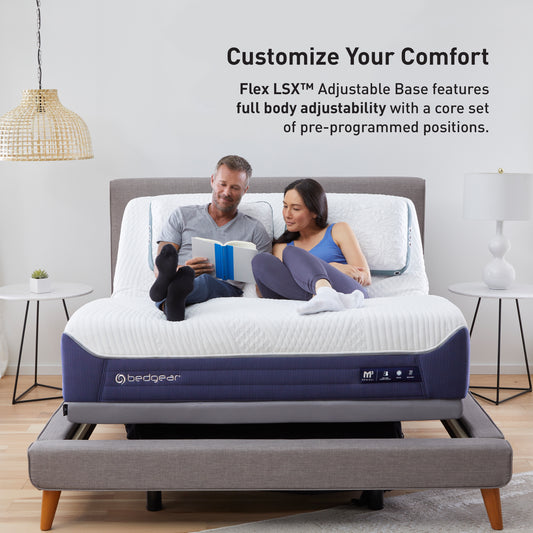
The BEDGEAR Flex SH Split Head Adjustable Base is built specifically for this. Each side of the bed has independent head and lumbar adjustment; one partner can sleep in zero gravity while the other stays flat, uses the anti-snore preset, or sets a completely custom angle — with no interference between the two sides.
For couples where one person snores and the other doesn't, or one has lumbar issues and the other prefers a flat surface, the Flex SH removes the compromise entirely. It's the zero gravity benefit that directly addresses the most common reason couples avoid adjustable bases in the first place. For more on managing different preset needs on the same base, the zero gravity vs. anti-snore guide covers the practical setup in detail.
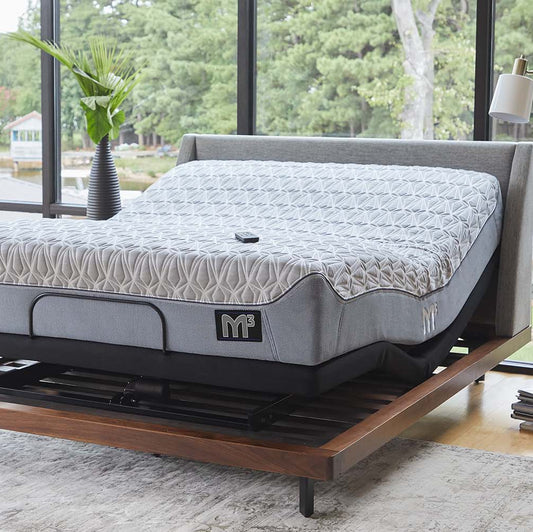
Each of these seven benefits is strongest when the base is paired with a compatible mattress. BEDGEAR's Performance® mattresses are built to articulate with the Flex lineup, which are the individually wrapped coil systems and foam layers move with the base rather than resisting it, which means the body is actually supported at the angle rather than bridging across a surface that hasn't followed the adjustment.
3 Limitations of a Zero Gravity Adjustable Base Beds
The benefits are real. However, so are the limits, and it's important for us to be open about that. Being clear about both is how you make an informed decision and set realistic expectations for what the position will actually do for your sleep.
Not a Medical Treatment
Zero gravity is a positional adjustment. It doesn't treat underlying conditions; it changes the environment those conditions live in during sleep.
Mattress Compatibility Matters
A rigid or non-flexible mattress won't articulate with the base, limiting or eliminating most of the positional benefit.
Takes Time to Adjust
Most people adapt within five to seven nights. The first few nights in any new sleep position feel unfamiliar — don't judge it by night one.
Learn more about these disadvantages of zero gravity adjustable bases below.
Zero Gravity is Not a Medical Treatment
This is the most important limitation to carry through every benefit listed above, and we need to make that very clear. Zero gravity may reduce lumbar pressure for some sleepers — it does not treat herniated discs, spinal stenosis, sleep apnea, GERD, or any other diagnosed condition.
It may make the sleep position feel more comfortable while a condition is being managed; it is not managing the condition itself. Anyone using zero gravity as part of a health-related sleep strategy should be doing so alongside appropriate medical care, not instead of it.
The benefits in this post are framed with that in mind throughout. "May help," "may reduce," and "results depend on the individual" aren't hedging for its own sake — they reflect the reality that positional adjustments are variable, and the right response to significant health concerns is evaluation and treatment from a qualified provider.
Zero Gravity Works Best With a Compatible Mattress
An adjustable base sets the angle; the mattress determines whether the body is actually supported within it. A mattress that can't flex with the base, one with rigid border rods or interconnected coil systems, won't follow the adjustment.
The base articulates and the mattress bridges, which creates pressure points at the lower back and behind the knees rather than relieving them. That's the opposite of what zero gravity is supposed to do.
BEDGEAR's Performance® mattresses, thankfully, are built to move with the Flex lineup. If you're pairing a new base with a mattress you've had for years, check compatibility before assuming the position is delivering its full benefit. The base and the mattress are a system; a mismatch in that system limits what either half can do.
Zero Gravity May Take a Few Nights to Feel Right
Any significant change to your sleep position takes adjustment time. Zero gravity is a different angle than flat sleeping; even when it's ultimately the right position for you, the first few nights may feel unfamiliar. Most people adapt within five to seven nights.
The Flex LS and Flex LSX both include programmable memory positions, so once you've found an angle that works well for your body, you can save it and return to it without adjusting from scratch each night.
It's also worth checking your pillow loft once you start sleeping in zero gravity. When the head is already elevated by the base, the amount of loft you need from a pillow changes. This is because too much pushes the neck into forward flexion, too little leaves the head unsupported. Our pillow loft guide covers how to find the right fit at the new angle.
Seven Benefits. One Button.
Every BEDGEAR Flex adjustable base includes zero gravity as a built-in preset. Pair it with a compatible Performance® mattress and the whole system works together from night one.
Are the Benefits of a Zero Gravity Adjustable Base Worth It?
For most people shopping for a base: yes. The zero gravity position addresses a wider range of sleep problems than most people expect when they first encounter it. Back discomfort, snoring, circulation, acid reflux, overnight breathing, recovery; those are seven distinct areas where a single positional adjustment may make a meaningful difference.
That's not a coincidence, though, because the benefits stack because the underlying mechanics are connected. Better weight distribution leads to less lumbar tension; less tension allows muscles to relax; relaxed muscles support deeper sleep; deeper sleep supports better recovery. As you can see, the position works as a system.
Of course, the limitations are real too, and they're worth taking very seriously. Zero gravity doesn't treat underlying conditions. It needs a compatible mattress to deliver its full benefit. And it takes a few nights to adjust to. None of those are dealbreakers — they're just honest context for what you're investing in and what to expect.
What separates a BEDGEAR Flex base from a standard adjustable is the precision of the presets, the compatibility with our Performance® mattress lineup, and (on the Flex SH) the independent adjustability that makes the couples' benefit possible in a way that a single-motor base simply can't replicate. Sleep Fuels Everything®, and zero gravity is where that starts. Let's Wake Ready®.
Zero Gravity Adjustable Base Benefits: Frequently Asked Questions
The questions we hear most about what a zero gravity adjustable base actually does.