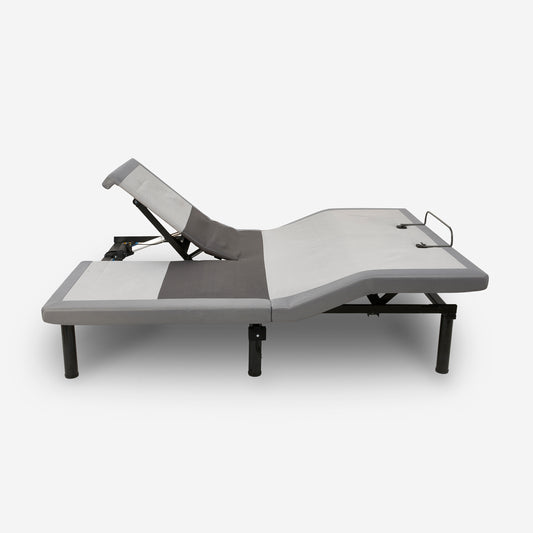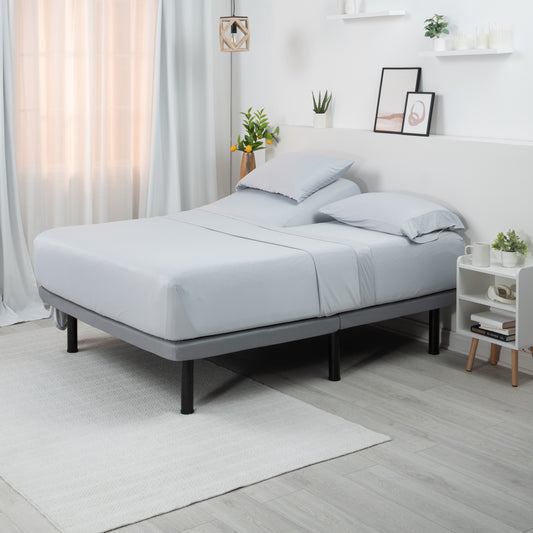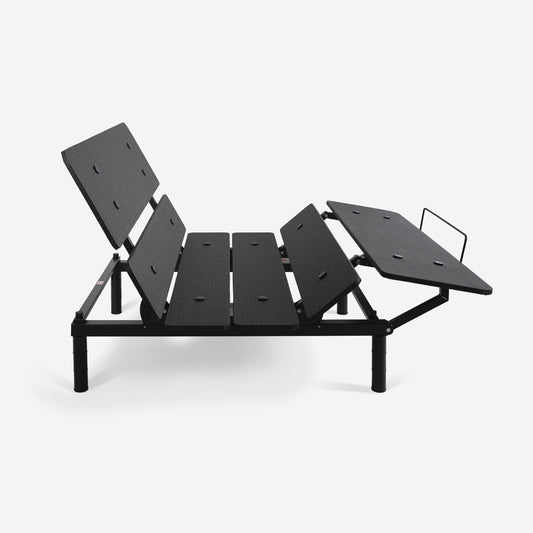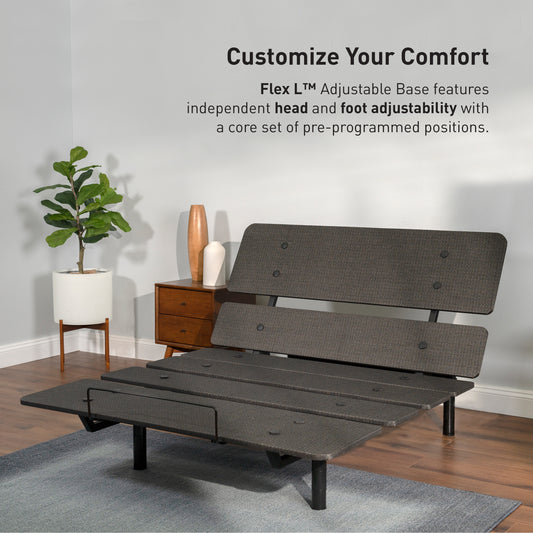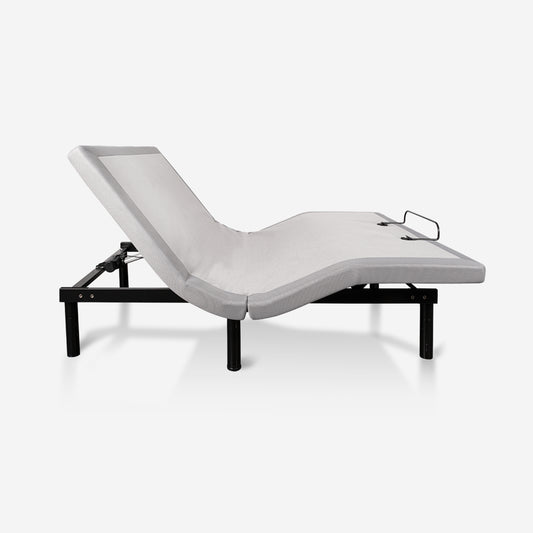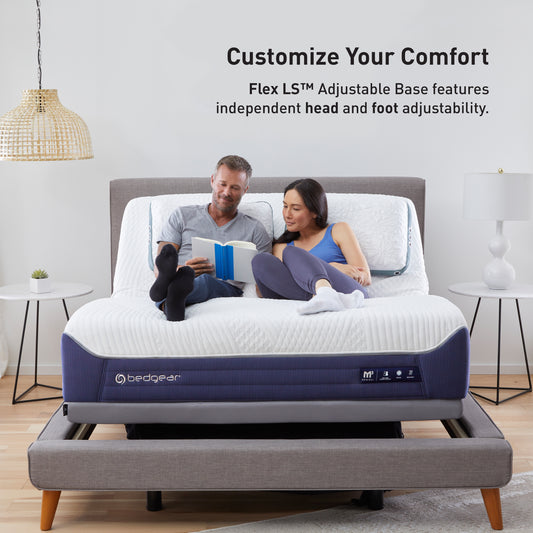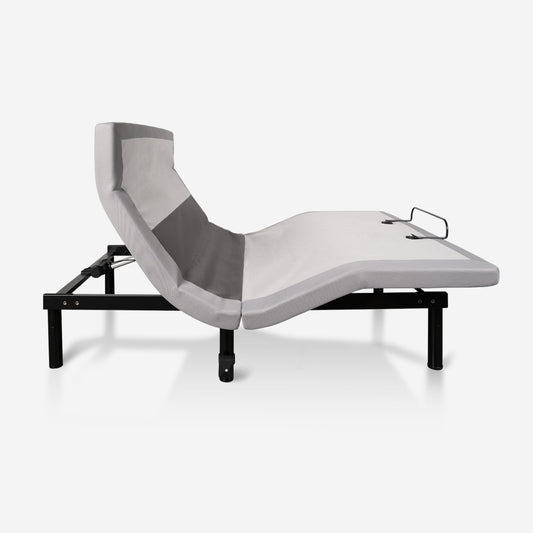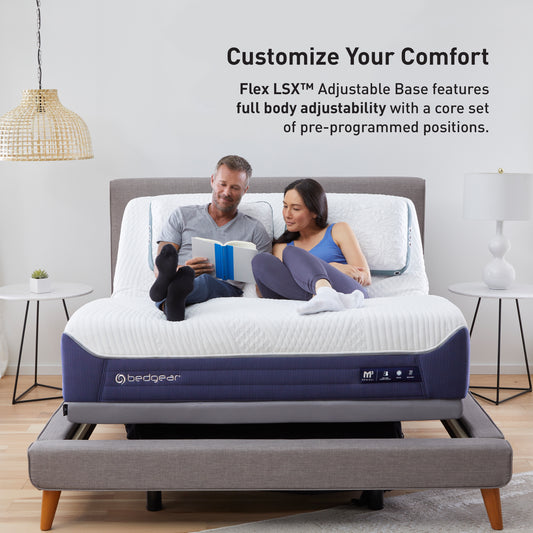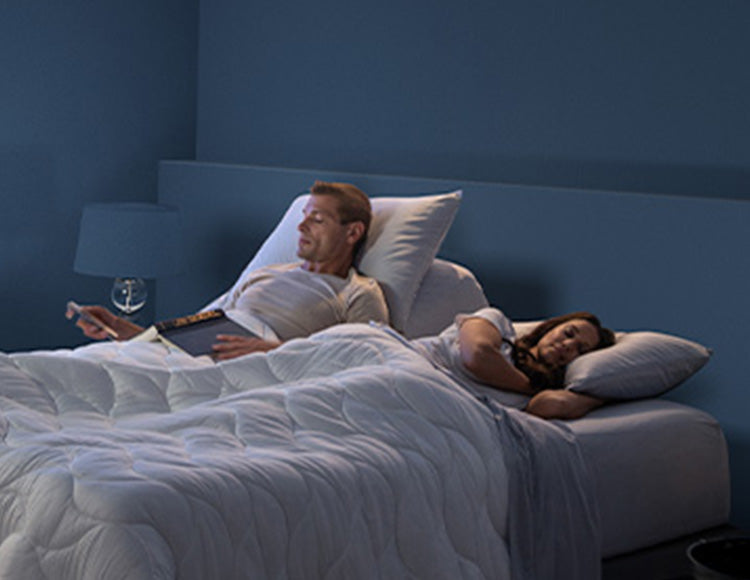
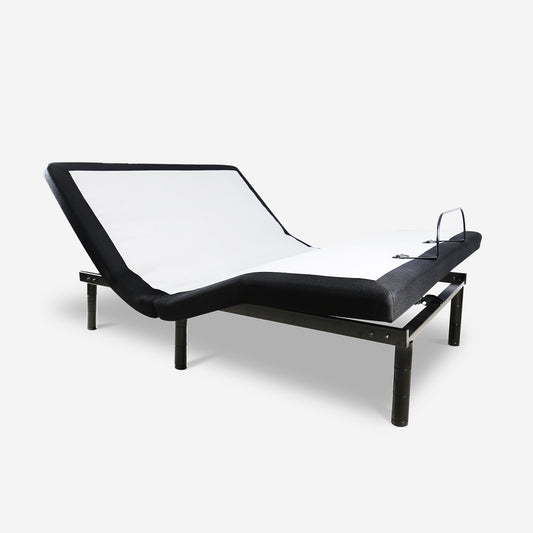
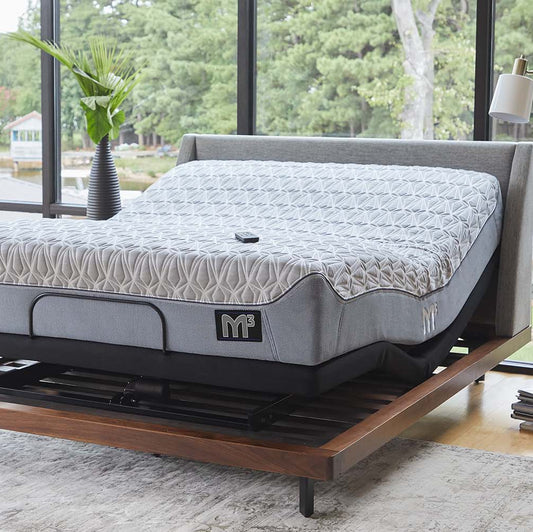
Head up, knees up, weight off your lower back. The position your body finds when nothing is pulling on it.
Zero gravity is not a product; it is an angle. Getting there takes an adjustable base that raises your head and legs together, a mattress that bends with it, and a pillow sized for a reclined head instead of a flat one. Open the simulator below and watch what happens when your knees pass heart level.
What Makes Up a Zero Gravity Bed
One-Button Preset
Head and legs rise together, no manual adjusting.
Knees Above Heart
The leg lift is what takes the pull off your lower back.
Lumbar Fill
Independent lumbar closes the gap under your spine.
No Sliding Down
The bend behind your knees anchors you all night.
Mattress That Bends
Pocket coil and hybrid flex without a pressure ridge.
Lower Pillow Loft
A reclined head needs less pillow than a flat one.
Saved Positions
Program your angle once and return to it nightly.
Split Options
Your side reclines, their side stays flat.
Position Simulator See the Zero Gravity Angle Move the sliders and watch for the moment your knees clear heart level.
The Basics What Is Zero Gravity Sleep? Where the name came from and why pillows cannot get you there.
What Is Zero Gravity Sleep?
Zero gravity is a sleeping position where your head and your legs are both elevated, with your knees resting slightly higher than your heart. The name comes from the posture astronauts settle into when there is nothing pulling on them; the body finds a neutral, slightly curled shape instead of lying flat.
You cannot build it out of pillows. It takes an adjustable base that raises the head and foot sections at the same time, which is why zero gravity shows up as a one-button preset rather than a mattress feature.
Why the Legs Have to Go Up Too
Raising only your head is an incline, and an incline turns the bed into a slide. Bringing the foot section up puts a bend behind your knees that anchors you in place. That is the difference between waking up where you started and waking up in a heap at the foot of the bed.
The Angle That Matters
The classic shape puts your torso and thighs at roughly a 120-degree angle, with a similar bend behind the knees. It looks more reclined than people expect the first time they see it, and it feels less like sitting up in bed than like settling into a well-shaped chair. Most people adjust a few degrees off the preset and save that as their own.
Pillow Loft Calculator Your Flat-Bed Pillow Is Probably Wrong Loft is calculated for a flat surface. Reclining changes the math. Here is your number.
Answer above and we will narrow it down.
Why the Number Moves
Pillow loft is sized for a flat mattress, where the pillow has to fill the entire space between your head and the bed. Once the head section rises, the mattress is already doing part of that job. Keep your flat-bed pillow and it pushes your chin toward your chest, which is the sore neck people wrongly blame on the base.
Our pillow collection is sorted by loft and sleep position. The guide to choosing pillows for your sleep position walks through measuring yours, and best pillows for side sleepers covers the shoulder-gap question in more depth.
Build the System Four Pieces That Have to Cooperate The position is only as good as the bed underneath it. Most people plan for one of these.
-
The Base Sets the Angle
Without an adjustable base there is no zero gravity at any pillow arrangement. Look for a zero gravity preset plus independent lumbar, since the lumbar adjustment is what keeps the position from turning into a slouch by hour two. Programmable memory matters as well, because you will want to return to your angle rather than rebuild it nightly.
Shop Adjustable Bases -
The Mattress Has to Bend With It
A mattress that resists bending fights the base every night, and you feel it as a firm ridge where the bed folds. Foam, hybrid, and pocket coil constructions flex cleanly and return to shape; a heavily reinforced perimeter is the tell that a mattress was built to stay flat. Pocket coils also keep support even across the bend, so the shoulders and hips feel the same.
Shop Hybrid Mattresses -
The Pillow Changes at a Recline
This is the piece almost nobody accounts for, and it is the cheapest one to get right. Run the loft calculator above, then match it. Back sleepers in zero gravity generally drop a loft band from what they use flat; side sleepers need enough to fill the shoulder gap without overfilling it at the angle.
Shop Pillows -
Sheets That Survive the Movement
A bed that articulates nightly will work a loose fitted sheet off the corners fast. Deep pockets and real corner tension matter more here than on a flat bed. On a split configuration it is worse, since each side pulls at the bedding independently; twin XL fitted sheets on each side hold better than stretching one king sheet across both.
The Honest Version Why People Sleep This Way What the position does, without promising you anything it cannot deliver.
Lower Back Pressure
Lying flat leaves the lumbar curve unsupported while your legs pull down on your pelvis. Bending the knees and raising them may help relieve pressure there for some sleepers. It is a position change, not a treatment, and how much it helps varies a lot from person to person. If you are dealing with ongoing back pain, that is a conversation for a doctor; our guide to the best mattresses for back pain covers the surface underneath you.
Congestion and Snoring
An elevated head is a comfort position many people prefer when they are stuffed up or snoring, and a few degrees is usually enough to notice. It is a setting, not a solution. Loud, frequent snoring paired with daytime tiredness is worth raising with a doctor rather than solving with bedding; our article on sleep apnea is a reasonable starting point.
Long Days on Your Feet
Legs up is the position people reach for after a shift standing or a long flight. Nurses, teachers, and retail staff tend to find it first. You do not have to commit to it overnight either; plenty of people use zero gravity for half an hour in the evening, then flatten the bed and sleep however they normally do.
Reading Without the Pillow Tower
This is the underrated one. Zero gravity supports you for three hours of reading or watching something without the pillow stack that always collapses. Your hands stay free and your neck is not doing the work. Save it as a preset and it is one button away every night.
Common Questions, Longer Answers Side Sleeping, and How It Compares to Flat Yes you can side sleep in it. There is an adjustment.
Can You Side Sleep in Zero Gravity?
You can, with a change. The position is built around a back sleeper's shape, so side sleepers usually lower the head elevation and keep the leg lift. Rolling onto your side at a steep head angle can twist the spine at the waist, which is the opposite of the point.
Start from the preset and bring the head section down until your shoulders sit comfortably; most side sleepers land somewhere between flat and full zero gravity. Then re-check your pillow, because side sleeping at an incline changes the space between your ear and your shoulder. The Side Sleeper Zero G preset in the simulator above is roughly where people end up.
Zero Gravity Compared to Flat
| Flat | Zero Gravity | |
|---|---|---|
| Lower back | Lumbar curve unsupported, legs pulling down | Knees bent, weight taken off the lumbar area |
| Sliding | Nothing to slide off | Knee bend anchors you in place |
| Pillow loft | Standard loft for your position | Usually one band lower |
| Stomach sleepers | Works well | Not a fit |
| Reading in bed | Pillow tower that collapses | Holds the angle for hours |
| Switching | One position, always | Flatten it any night you want |
Flat is the default because beds historically did one thing, and it works fine for plenty of people. The case for zero gravity is not that flat is broken; it is that having a second option costs you nothing on the nights you do not use it.
Questions Zero Gravity Sleep FAQ Beds, mattresses, pillows, and how to set the position.
What Is a Zero Gravity Bed?
A zero gravity bed is an adjustable bed set to a position where your head and legs are both elevated, with your knees resting slightly above heart level. The name comes from the neutral posture the body settles into in the absence of gravity. It requires an adjustable base that moves the head and foot sections at the same time; pillows alone cannot create it. Most modern adjustable bases include it as a one-button preset.
What Are the Benefits of Zero Gravity Sleep?
The position takes the downward pull of your legs off your lower back and supports your body along its natural curve rather than flattening it. Many people find it more comfortable than lying flat, particularly for reading, unwinding, or settling in at night. It is a comfort position rather than a medical treatment, so results vary from person to person. A few nights of small adjustments is the only way to know whether it suits you.
Is a Zero Gravity Bed Good for Back Pain?
Some sleepers find that bending the knees and raising the legs may help relieve pressure in the lower back, since lying flat leaves the lumbar curve unsupported. The mattress underneath matters just as much as the angle; a surface that lets your hips sink will work against the position. Use the lumbar adjustment on your base as well, since that supports the curve directly. If you have ongoing back pain, discuss it with a doctor rather than treating it as a bedding decision.
Can You Side Sleep in the Zero Gravity Position?
You can, with adjustments. Most side sleepers lower the head elevation and keep the leg lift, since a steep head angle can twist the spine at the waist when you roll over. You will also want to check your pillow loft, because side sleeping at an incline changes how much space there is between your ear and your shoulder. If you switch positions overnight, set the base for whichever one you spend the most time in.
Do You Need a Special Mattress for a Zero Gravity Bed?
You need one that flexes. Foam, hybrid, and pocket coil mattresses bend with the base and return to shape; rigid innerspring constructions resist the movement and can develop a firm ridge where the bed folds. All of our mattresses are built to articulate, and the pocket coil system keeps support even across the bend. If you are pairing a base with a mattress you already own, a heavily reinforced perimeter usually means it was built to stay flat.
What Pillow Works Best in the Zero Gravity Position?
Usually a lower loft than you would use lying flat. Once the head section is raised, the mattress is already supporting part of your upper body, so a pillow sized for flat sleeping tends to push your chin toward your chest. Back sleepers in zero gravity generally want a low to medium loft; if you shift onto your side during the night, you will need a bit more to fill the shoulder gap. It is the least expensive part of the system to get right and the one that fixes the most complaints.
How Do I Set the Zero Gravity Position?
On our Flex adjustable bases, one preset button takes you from flat to zero gravity. From there you can fine-tune the head, lumbar, and foot sections separately, then save the result as a programmable position so you can return to it with one press. Most people adjust a few degrees off the preset before they find the angle that suits them. Give it a few nights; the angle that feels right on the first evening is often too upright by the end of the week.
Can Two People Use Zero Gravity if Only One of Them Wants It?
Yes, with a split configuration. Split king gives each side its own base and remote, so one of you can recline into zero gravity while the other stays flat. Split head keeps the foot of the bed as one continuous surface while the head sections move independently, which suits couples who differ on reading angle but not on legs. Two twin XL bases side by side measure the same as a standard king, so the room layout does not change.